
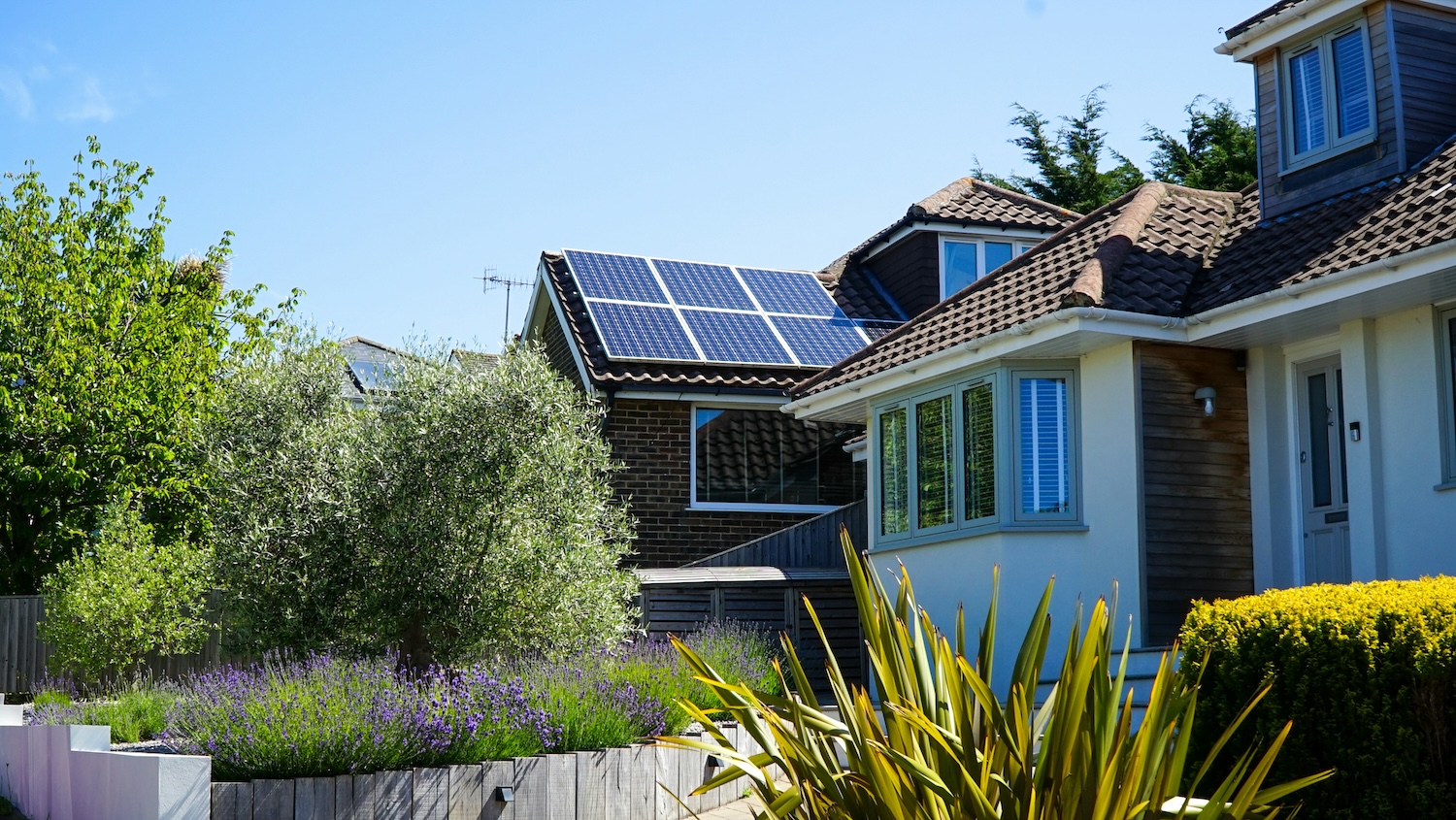
From lower energy bills, potentially higher property value, generous state incentives, and decreased carbon footprint, it may seem that, despite the initial costs, there are no downsides to installing solar panels on your home.
The government has been vocal in its support for solar alternatives. With electricity rates surging, it’s not at all surprising that more and more American homeowners are turning to solar energy.
In California, where the cost of living remains the highest in the country, over 14.6 million roofs have already adopted solar energy, with the state leading the race for solar energy production, followed closely by Texas and Florida.
According to estimates, a household can save between $37,000 and $154,000 in about 25 years of using solar panels. And that’s not counting the financial incentives someone may receive.
That said, if you’re a homeowner and in a community with an HOA, you may wonder if they have any say in whether you can install a solar panel on your roof or not.
The good news is that, with the state strongly endorsing renewable sources of energy, certain laws protect your right to do so. However, your HOA may still impose a valid architectural review process before installation.
Here’s a breakdown of everything you need to know.
Can an HOA Stop You From Installing Solar Panels in California?
In California, the short answer is usually no—a homeowners’ association can’t outright prohibit its member homeowners from installing solar panels on their property.
The Golden State has some of the strongest solar energy protection laws in the US, as well as incentive programs encouraging panel installations.
It explicitly bans local governments and HOAs from unreasonably preventing the installation of solar panels on properties, as outlined in the California Civil Code Sections 714 and 714.1.
However, this doesn’t mean they don’t have any say at all.
As stipulated in the same statute, a homeowners’ association can regulate how and when you can install them. Nevertheless, the law makes it clear that these provisions must be “reasonable.”
In other words, they must not effectively hinder someone from installing solar panels on their property or interfere with the system’s performance.
The entire review process for a solar panel installation in California generally takes approximately 30 to 45 days.
Why Do HOAs Restrict Solar Panel Installations?
There are several reasons why a homeowners’ association may regulate and manage solar panel installations in the community. Often, their concerns fall into any of these three categories.
Visual Impact Concerns
Associations place a high priority on community aesthetics to protect property values. You may find this surprising, but an attractive design can significantly boost a house’s market price.
For this reason, in addition to maintaining a consistent neighborhood appearance, HOAs enforce rigorous rules for landscaping, home exteriors, area maintenance, and installations like solar panels.
An HOA can regulate how the solar panels should look, such as requiring low-profile mounting structures. They may instruct that the wiring is hidden or painted to match the surroundings and set standards for material finishes.
In some cases, an association may request that homeowners place solar panels only on rear-facing roofing surfaces. Others prohibit ground-mounted designs and mandate flush-mounting.
Roof Damage Worries
Safety is a major concern for some HOAs. Installing panels heavier than your roof can support, poor installation techniques, and fire hazards are all legitimate considerations your board could present.
They are permitted by law to set rules for these instances, especially for older properties.
For example, your local association can require you to submit proof that your roofing structure can support an entire solar panel system’s weight. That, in addition to building and electrical code compliance.
They may also want to verify that you’re working with state-licensed contractors for the project for the same reason.
Property Value Fears
In the past, homeowners’ associations may have prohibited solar panel installations, thinking that they negatively impacted the resale value of properties in their community.
However, this belief has already been proven false, with studies indicating a substantial 4.1% increase in property value for houses with solar panels installed.
Recent Solar Insure research also found that properties with alternative solar energy systems sold 5% to 10% more.
With electricity rates in California reaching 30 to 32 cents per kilowatt-hour (kWh), buyers find the idea of reduced bills, energy independence, and market potential attractive.
California Solar Rights Laws
As in most states, there are two pieces of legislation preserving homeowners’ rights to solar energy: solar access laws and solar easements.
Solar access laws are statutes that expressly ban anyone from limiting or prohibiting solar systems. Solar easements, on the other hand, protect your access to sunshine.
Overview of the California Solar Rights Act
Established in 1978, the California Solar Rights Act states that an association shall not make policies “prohibiting the installation or use of a rooftop solar energy system for household purposes.”
You can find this law in the California Civil Code § 714, 714.1, and 4746.
Considered one of the strongest solar protection laws in the country, HOA regulations or restrictions that violate the Solar Rights Act are considered void, which means they’re unenforceable.
Willful violations of the act may result in:
- Actual damages
- Up to $1,000 civil penalties
- Other legal fees
In addition to the homeowners’ rights to solar energy panels, the statute is further enhanced with solar easements and the Solar Shade Control Act. Both are carried out on a case-by-case basis.
Key Protections for Homeowners
The Solar Rights Act provides several key guardrails for California HOAs, shielding residents from unjust community policies.
First, associations can’t increase the installation cost by more than $1,000. This means they can’t impose restrictions that could raise the homeowner’s out-of-pocket cost beyond that threshold.
Examples include requiring costly modifications, insisting on certain expensive contractors, or demanding unnecessary alterations or additions exceeding the amount set by the Solar Rights Act.
Additionally, HOAs can’t impede a system’s efficiency by more than 10%. This may include forcing panel placements in low-sun areas to hide them or mandating designs that hinder operating capacity.
The Solar Rights Act further streamlines the application process for California homeowners, preventing unnecessary delays.
Under Civil Code § 714, if an association requires approval for solar panel installations, applications must be processed within 45 days. Otherwise, the application is considered approved.
All processes must always be recorded in writing.
They aren’t allowed to use vague reasons, such as “safety concerns,” to deny solar panel applications without providing sufficient justification. Arguments for denying installations that are purely based on arbitrary aesthetics are illegal.
Recent Updates & Amendments
Since its inception, California’s Solar Rights Act has seen multiple amendments, strengthening the state’s solar laws.
Previous amendments include:
- Streamlining applications by setting a 45-day time limit (2014)
- Limiting cost increase to $1,000 and efficiency drop at 10% (2014)
- Prohibiting HOAs from setting voting requirements (2017)
- Refining solar easement regulations (2021)
One of the more recent updates happened in 2025, involving the Assembly Bill 942.
In its original iteration, the bill proposed to stop NEM agreements for solar panel owners if they sold their properties. The amended version now maintains net-metering contracts for homeowners who own solar systems.
Your Rights as a Homeowner Against HOA Restrictions
Knowing your rights regarding solar panel installations in California is important. If an HOA tries to impede your project with seemingly unlawful restrictions, you have the right to request written justification.
Under the California Solar Rights Act HOA, you can legally challenge “unreasonable” regulations that hinder you from owning solar and seek remedies if needed.
The law, however, can’t protect homeowners in certain instances, such as:
- Installing solar panels without submitting a formal application
- Violating aesthetic regulations that comply with the law
- Failing to obtain appropriate permits
- Damaging the common area and other HOA properties
While you have a legal right to own and operate a solar system, bypassing the permitting process set by the HOA can result in violation notices, monetary penalties, and demands for corrections.
In some cases, they may be allowed to pursue legal action against serious violators. If you’re considering going solar, be sure to coordinate with your HOA before moving forward with your project.
How to Get HOA Approval for Solar Panels In California
While California law favors homeowners when it comes to solar energy, cooperating with your HOA is still the best approach when installing solar panels for the first time.
The first thing you want to do is to review your association’s guidelines.
You can typically find your HOA’s guidelines in your community’s governing documents. There, they may outline the regulations surrounding acceptable installation areas, aesthetic preferences, and specific structural limitations.
Any references to the Civil Code § 714 are always a good sign.
Next, submit a formal application for solar panel approval. Depending on the HOA, you may be required to present a site plan, roof layout, electrical diagram, contractor information, and proof of insurance.
Some associations may also demand a stamped letter from a licensed structural engineer confirming that your roof can carry an entire solar energy system.
Make sure to keep track of the days after your submission. Failing to issue a written denial within 45 days means the Solar Rights Act deems your request approved.
Tips for Installing Solar Panels in HOA Communities In California
The best way to avoid butting heads with your HOA is to follow its lawful guidelines and restrictions.
Hire Experienced Solar Installers
Many HOAs require homeowners to hire licensed and insured contractors for solar panel installations. Be ready to present proof of your installer’s license and insurance information. This ensures the project is safe and is up to standard.
Choosing HOA-Compliant Designs
Read and remember your HOA’s placement and aesthetic restrictions. They’re there for a reason. If they don’t violate the Solar Rights Act, it’s in your best interest to follow them to the T.
Some installers now offer HOA-compliant designs, such as all-black, flush-mounted panels and hidden conduit wiring.
Documentation & Approval
Always keep a copy of written records when submitting an application to your HOA. This includes written correspondence, approval forms, structure specifications, and other documents related to your project.
FAQs
Can an HOA stop me from installing solar panels in California?
Can HOA prevent solar panels? Under normal circumstances, an HOA can’t stop homeowners from installing solar panels in California. They can, however, have a say in when and where you can place them.
What protections does the California Solar Rights Act provide?
The Solar Rights Act protects homeowners from various unlawful restrictions. They can’t impose costly policies or prohibitive requirements based on design, as well as on where to place your panels.
How do I appeal an HOA solar denial?
You can appeal an HOA solar denial by requesting a written and detailed reason for rejecting your application. Work with your installer to resolve the objections before sending a formal appeal, alongside an updated project plan.
If you have reasons to believe the HOA violates solar panels HOA California laws, consider seeking legal counsel.