

What Is An Hoa?
A Homeowners Association (HOA) is a governing body that manages and enforces rules in a residential community, including condos, planned developments, and single-family neighborhoods. HOAs collect assessments (dues) from homeowners to maintain common areas, provide amenities, and protect property values.
Many HOAs in California contract with professional management companies to handle day-to-day operations and compliance with state regulations.
California HOA by the Numbers
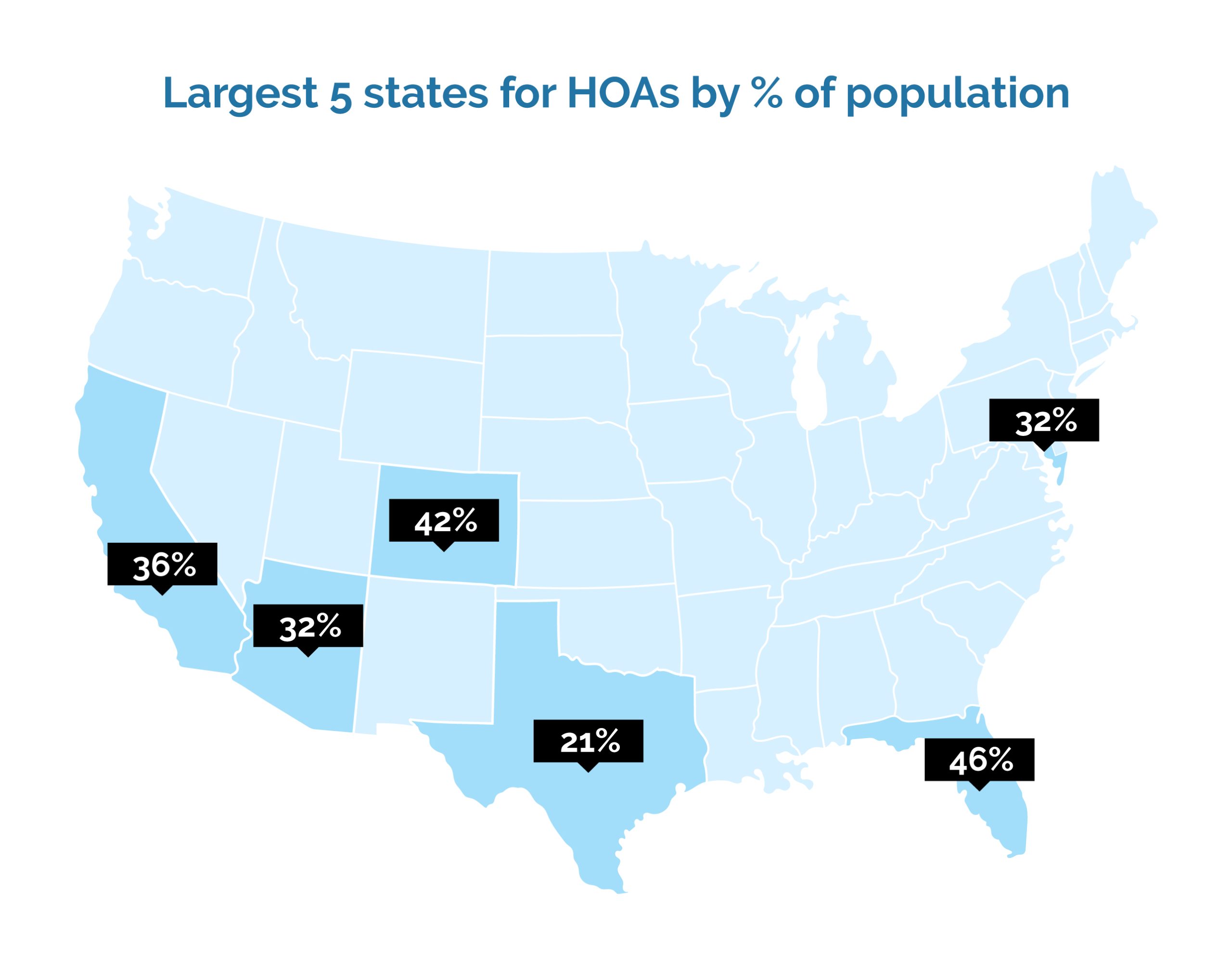
California is one of the most HOA-dense states in the U.S., both in size and impact.
Statewide Statistics
- 50,700+ HOA communities operate in California.
- Over 14.4 million residents live in HOA-governed communities in the state.
- These communities include approximately 5.0 million housing units.
These figures come from the 2024 CAE Foundation for Community Association Research Statistical Review.
Why this matters: California has more HOA communities and community residents than any other state in the United States, reflecting both high population and the prevalence of planned and multi-unit housing developments.
HOA Growth and Housing in California
HOAs in California have expanded steadily over the past decade, driven by a combination of housing demand, land constraints, and regulatory requirements. Growth has been robust in urban and suburban areas where high-density housing is necessary to accommodate population needs.
Key factors contributing to HOA growth include:
High-Density Housing Development
With limited land availability, California relies heavily on condominiums, townhomes, and vertical housing, all of which commonly require HOAs to manage shared structures and amenities.
Regulatory & Compliance Requirements
California has some of the most comprehensive HOA regulations in the U.S., including financial disclosures, reserve studies, and governance standards. HOAs provide a structured way to ensure compliance at the community level.
Shared Amenities & Infrastructure
Many California communities feature shared amenities such as parking structures, elevators, pools, green spaces, and security systems. HOAs manage and fund the upkeep of these shared assets.
Property Value Preservation
In high-value real estate markets, HOAs help protect investments by enforcing architectural guidelines, maintenance standards, and community rules that preserve neighborhood appeal.
Resident Impact and Perception
While specific statewide satisfaction data isn’t published in full for California alone, national research suggests:
- About 89% of homeowners in California community associations report a positive or neutral experience living in an HOA environment, according to industry insight referenced by professional management firms.
This aligns with broader national satisfaction surveys that find most homeowners believe associations help maintain property values and shared community standards.
HOA Trends in the Western U.S.
Across the western United States:
- States like California, Colorado, and Washington have some of the highest percentages of housing stock in HOAs, driven by urban density and planned communities.
California’s HOA share is among the highest nationally, often estimated near or above 36% of the housing market.
National Comparison – Where California Stands
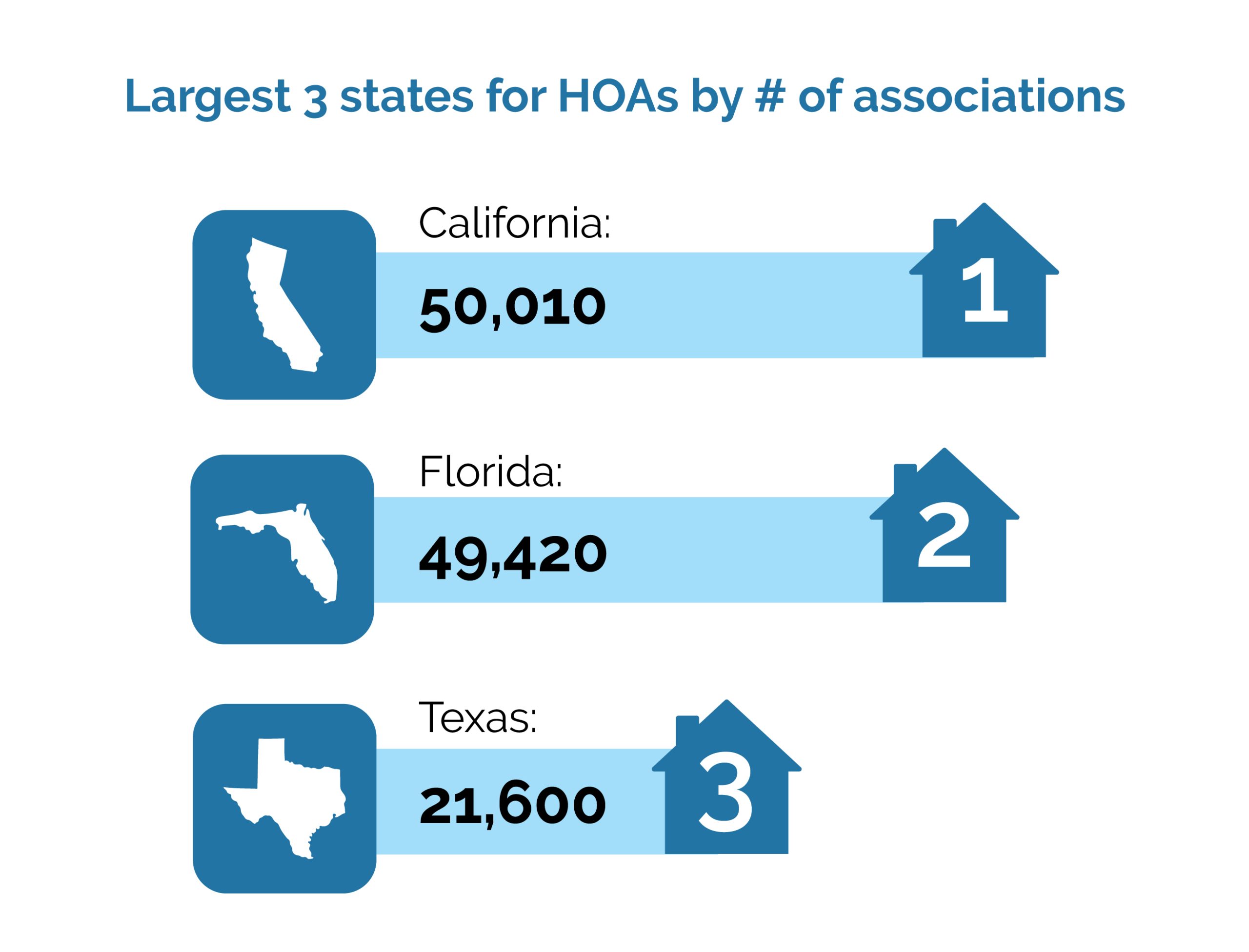
According to the Community Associations Institute (CAI) national statistical review:
States With the Most HOA Communities
- California – ~50,700+ associations
- Florida – ~49,800 associations
- Texas – ~22,300 associations
- Illinois – ~19,550 associations
- North Carolina – ~14,900 associations
This shows California’s leadership in both the number of HOA communities and the number of residents impacted.
HOA Fees and Housing Costs
While specific statewide HOA average dues can vary widely across California cities and housing types, national data shows that:
- Approximately 21.6 million U.S. households paid an HOA or condo fee in 2024.
- Fee amounts vary broadly by market and property type, with urban and coastal areas often on the higher end.
In California’s major markets, many homeowners face higher fee burdens due to dense construction, shared amenities, and local insurance costs.
The Takeaway

California remains a national leader in HOA prevalence due to:
- High population density
- Prevalence of planned communities and multi-unit housing
- Strong emphasis on shared amenities and aesthetic standards
With tens of thousands of communities and millions of residents under HOA governance, California’s HOA landscape continues to shape how people live, invest in property, and participate in local governance.
Sources
https://www.caionline.org/getmedia/6e09c195-2c4a-4b06-ae03-85a06fbb70d5/2023statsreviewdigital.pdf
https://foundation.caionline.org/wp-content/uploads/2025/03/FBStatsReview2024web.pdf
https://foundation.caionline.org
https://ipropertymanagement.com/research/hoa-statistics
https://www.fsresidential.com/california/news-events/articles/inside-california-hoa-trends/
https://www.census.gov/library/stories/2025/09/condo-hoa-fees.html https://www.axios.com/local/san-diego/2025/02/18/homeowners-association-fees-hoa-dues-san-diego-county